Key Concepts:
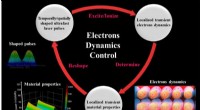
* Electrons are not confined to orbits: Instead, they exist in regions of space called orbitals, which are defined by their shape, size, and energy level.
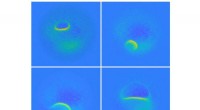
* Orbitals are probabilistic: The quantum mechanical model describes the probability of finding an electron at a specific point in space. This is represented by the electron density, which is higher in regions where the electron is more likely to be found.
* Electrons have wave-particle duality: Electrons exhibit both wave-like and particle-like properties. This concept is captured in the Schrödinger equation, which describes the behavior of electrons in atoms.
* Atomic orbitals have specific shapes: Different orbitals have different shapes, such as spherical (s orbitals), dumbbell-shaped (p orbitals), and more complex shapes (d and f orbitals). These shapes reflect the probability distribution of the electron within the orbital.
* Quantized energy levels: Electrons can only occupy specific energy levels within an atom. These energy levels are quantized, meaning they can only exist at discrete values.
In Summary:
The quantum mechanical model provides a more accurate and sophisticated description of the atom compared to the Bohr model. It emphasizes the probabilistic nature of electron behavior and the wave-like properties of electrons, leading to a better understanding of chemical bonding and the reactivity of atoms.