Here's a breakdown:
* Direction of wave propagation: The direction the wave travels.
* Direction of particle motion: The direction the individual particles of the medium (or object) move.
In transverse vibration, the direction of particle motion is perpendicular to the direction of wave propagation.
Examples of transverse waves:
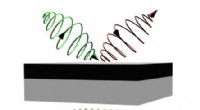
* Light waves: Electromagnetic waves, including light, are transverse. The electric and magnetic fields oscillate perpendicular to the direction of light propagation.
* Waves on a string: A guitar string vibrates transversely when plucked.
* Water waves: While complex, the motion of water particles in a wave is predominantly transverse.
Contrast with Longitudinal Vibration:
In longitudinal vibration, the particle motion is parallel to the direction of wave propagation. Think of a spring: if you compress and release one end, the compression wave travels along the spring, and the coils move back and forth in the same direction as the wave.
Here's a table to summarize:
| Vibration Type | Particle Motion | Wave Propagation | Example |
|---|---|---|---|
| Transverse | Perpendicular | Perpendicular | Light waves, waves on a string |
| Longitudinal | Parallel | Parallel | Sound waves, waves in a spring |
Understanding the difference between transverse and longitudinal vibration is crucial for comprehending various physical phenomena and applications in fields like acoustics, optics, and mechanics.