Here's a breakdown:
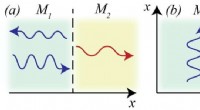
* Waves: For waves, amplitude is the maximum distance the wave moves from its resting position. Think of a wave in the ocean: the highest point of the wave is the crest, and the lowest point is the trough. The amplitude is the distance between the crest and the equilibrium position (the sea level).
* Oscillations: For oscillations, like a pendulum swinging back and forth, the amplitude is the maximum distance the pendulum swings from its central position.
Here's how amplitude is used in different scientific fields:
* Physics: Amplitude is crucial in understanding sound waves, light waves, and other types of wave phenomena. It determines the loudness of a sound or the brightness of light.
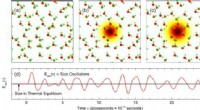
* Chemistry: In chemical reactions, amplitude can be used to describe the displacement of atoms during a reaction, impacting the overall energy changes involved.
* Biology: Amplitude can be used to measure the strength of an electrical signal in the nervous system or the intensity of a muscle contraction.
Key points to remember:
* Amplitude is a scalar quantity, meaning it only has magnitude, not direction.
* Amplitude is typically measured in units of length, distance, or angle.
* Higher amplitude corresponds to a stronger or more intense wave or oscillation.
Understanding amplitude is fundamental to comprehending many scientific phenomena and is used in various fields to quantify and analyze different aspects of the natural world.