Here's a breakdown:
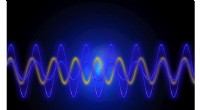
* Waves: Amplitude is the maximum displacement of a point on a wave from its resting position. For example, in a sound wave, amplitude determines the loudness (volume) of the sound. A higher amplitude means a louder sound. In a light wave, amplitude is related to the brightness of the light.
* Oscillations: Amplitude is the maximum displacement of an oscillating object from its equilibrium position. For example, in a pendulum, amplitude is the maximum angle the pendulum swings away from its vertical position.
Key points to remember:
* Amplitude is a scalar quantity, meaning it has magnitude but no direction.
* Amplitude is measured in units that correspond to the type of wave or oscillation. For example, sound wave amplitude is measured in decibels, while light wave amplitude is measured in volts per meter.
* Amplitude is an important characteristic of waves and oscillations, as it influences many of their properties.
Here are some examples of how amplitude is used in different areas of physics:
* Sound: Amplitude determines the loudness of sound.
* Light: Amplitude determines the brightness of light.
* Electromagnetic waves: Amplitude is related to the strength of the electric and magnetic fields in the wave.
* Mechanical oscillations: Amplitude determines the maximum displacement of an object from its equilibrium position.
Understanding amplitude is crucial in understanding how waves and oscillations behave and interact with their surroundings.