Here's a breakdown:
* Force: A force is a push or pull that can change the motion of an object. It's a vector, meaning it has both magnitude (how strong it is) and direction.
* Vector: A vector is a quantity that has both magnitude and direction. Examples include displacement, velocity, and acceleration.
* Resultant: The resultant is the vector sum of all the individual forces or vectors acting on an object. It's essentially the net effect of all the forces or vectors.
Here's how to find the resultant:
1. Graphical method:
- Draw each force or vector to scale.
- Place the tail of each vector at the head of the previous one.
- Draw a vector from the tail of the first vector to the head of the last vector. This is the resultant.
2. Analytical method:
- Resolve each vector into its horizontal and vertical components.
- Add the horizontal components and the vertical components separately.
- Use the Pythagorean theorem to find the magnitude of the resultant.
- Use trigonometry to find the direction of the resultant.
Example:
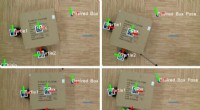
Imagine you're pushing a box with a force of 10 N to the right, while your friend is pushing the box with a force of 5 N upwards. The resultant force is the single force that would have the same effect as both your forces combined. You can find the resultant graphically or analytically.
In conclusion:
The resultant is a key concept in physics because it allows us to simplify complex systems of forces or vectors by representing them with a single equivalent force or vector. This helps us understand and predict the motion of objects.