Uniform Linear Motion
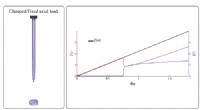
* Definition: Movement along a straight line at a constant speed.
* Key Characteristics:
* Constant Speed: The object covers equal distances in equal intervals of time.
* Straight Path: The object moves along a straight line.
* No Change in Direction: The direction of motion remains constant.
* Examples:
* A car traveling at a steady speed on a highway.
* A ball rolling across a smooth, flat surface.
* A falling object in a vacuum (neglecting air resistance).
Circular Motion
* Definition: Movement along a circular path.
* Key Characteristics:
* Constant Speed: The object can move at a constant speed, but its velocity is changing constantly.
* Circular Path: The object travels in a circle.
* Continuous Change in Direction: The direction of motion is constantly changing, even if the speed is constant.
* Examples:
* A car rounding a curve.
* A satellite orbiting Earth.
* A child on a merry-go-round.
Key Differences:
* Path: Linear motion follows a straight line; circular motion follows a curved path (a circle).
* Velocity: Linear motion has constant velocity (both speed and direction); circular motion has constant speed but changing velocity due to the changing direction.
* Acceleration: Linear motion has no acceleration (constant velocity); circular motion has centripetal acceleration, which is directed towards the center of the circle and is responsible for the constant change in direction.
In summary:
Uniform linear motion is characterized by straight-line movement and constant velocity. Circular motion involves a circular path, constant speed, but constantly changing velocity due to the continuous change in direction.