Here's what happens:
* Wavefronts: Imagine waves as a series of crests and troughs. When these wavefronts encounter an obstacle, they don't just stop abruptly at the edge.
* Bending: Instead, they bend around the edges of the obstacle. This bending effect is called diffraction.
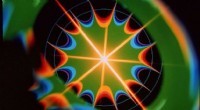
* Interference: The diffracted waves then interfere with each other, creating characteristic patterns of bright and dark areas.
Key Points:
* Wavelength: The smaller the wavelength of the wave compared to the size of the obstacle, the less noticeable the diffraction effect.
* Opening Size: The narrower the opening or the smaller the obstacle, the more pronounced the diffraction.
Examples:
* Light through a small slit: You'll see a pattern of bright and dark bands on a screen behind the slit.
* Sound waves around a corner: This is why you can still hear someone talking even if they are behind a wall.
* Water waves passing through a gap: The waves bend and spread out as they pass through the gap.
Let me know if you'd like to delve deeper into any specific aspect of diffraction!