Here are the key points of the particle theory of matter:
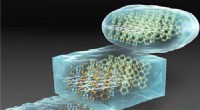
1. All matter is made up of tiny particles: These particles can be atoms, molecules, or ions, depending on the type of matter.
2. Particles are in constant random motion: This motion is called kinetic energy and is affected by temperature. Higher temperatures lead to faster particle movement.
3. Particles have space between them: The amount of space between particles varies depending on the state of matter. Solids have the least space, followed by liquids, and gases have the most space.
4. Particles attract each other: These attractive forces are called intermolecular forces and are stronger in solids than in liquids or gases.
5. Collisions between particles are perfectly elastic: This means that no energy is lost during collisions.
How the Particle Theory Explains Different States of Matter:
* Solids: Particles in solids are tightly packed and have strong attractive forces between them. This explains why solids have a fixed shape and volume.
* Liquids: Particles in liquids are closer together than in gases but have weaker attractive forces than solids. This explains why liquids have a fixed volume but can take the shape of their container.
* Gases: Particles in gases are far apart and have very weak attractive forces. This explains why gases can expand to fill their container and have no fixed shape or volume.
The Particle Theory and its Applications:
The particle theory of matter is a powerful tool for understanding various phenomena related to matter, including:
* Diffusion: The movement of particles from an area of high concentration to low concentration.
* Evaporation: The change of state from liquid to gas due to increased particle kinetic energy.
* Pressure: The force exerted by particles colliding with the walls of a container.
* Temperature: A measure of the average kinetic energy of particles.
Limitations of the Particle Theory:
While the particle theory is a valuable model, it has some limitations:
* It simplifies the complex interactions between particles. Real particles have more complex interactions than the theory suggests.
* It doesn't always accurately predict the behavior of matter at extreme conditions.
Despite these limitations, the particle theory of matter remains a fundamental concept in our understanding of the physical world. It provides a simple but powerful framework for explaining the behavior of matter at the microscopic level.