Understanding the Concepts
* Newton's Law of Universal Gravitation: This law states that every particle in the universe attracts every other particle with a force that is:
* Proportional to the product of their masses.
* Inversely proportional to the square of the distance between their centers.
* Force of Gravity (Weight): The force of gravity on an object near the Earth's surface is often referred to as its weight.
Formula
The formula for calculating the force of gravity is:
F = (G * m1 * m2) / r²
Where:
* F = Force of gravity
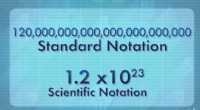
* G = Gravitational constant (6.674 × 10⁻¹¹ N⋅m²/kg²)
* m1 = Mass of Earth (6 × 10²⁴ kg)
* m2 = Mass of the object (1 kg)
* r = Radius of Earth (6.4 × 10⁶ m)
Calculation
1. Plug in the values:
F = (6.674 × 10⁻¹¹ N⋅m²/kg² * 6 × 10²⁴ kg * 1 kg) / (6.4 × 10⁶ m)²
2. Simplify:
F ≈ 9.81 N
Result
The force of gravity on a 1 kg mass at Earth's surface is approximately 9.81 Newtons. This is why we often say the acceleration due to gravity on Earth is approximately 9.81 m/s².