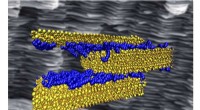
1. Matter is made of tiny particles: All matter is composed of extremely small particles that are in constant motion. These particles can be atoms, molecules, or ions, depending on the substance.
2. Particles are in constant motion: The particles are constantly moving, even in solids. This motion increases with temperature.
3. Particles have spaces between them: The particles are not packed tightly together, but rather have empty space between them. This space is called intermolecular space.
4. Particles attract each other: There are attractive forces between particles, called intermolecular forces. These forces are weaker than the forces that hold atoms together within a molecule.
5. Collisions between particles are elastic: When particles collide, they transfer energy to each other, but no energy is lost overall.
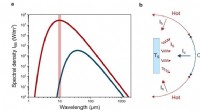
6. Temperature is a measure of average kinetic energy: The average kinetic energy of particles is directly proportional to the temperature of the substance.
These points help explain the behavior of matter in different states (solid, liquid, gas), as well as phenomena like diffusion, thermal expansion, and pressure.