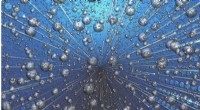
* Adding Energy: When energy is added to a substance, the molecules within it gain kinetic energy. This causes them to vibrate faster and move further apart.
* Solid to Liquid (Melting): Adding enough energy breaks the rigid bonds holding the molecules in a fixed lattice structure, allowing them to flow more freely.
* Liquid to Gas (Boiling/Evaporation): Adding even more energy overcomes the intermolecular forces entirely, causing the molecules to spread out and move independently as a gas.
* Removing Energy: When energy is removed from a substance, the molecules lose kinetic energy, causing them to vibrate slower and move closer together.
* Gas to Liquid (Condensation): Removing energy slows down gas molecules, allowing them to form weak bonds and become a liquid.
* Liquid to Solid (Freezing): Removing even more energy causes the molecules to slow down significantly and lock into a fixed lattice structure, forming a solid.
Key Points:
* Temperature: Temperature is a measure of the average kinetic energy of molecules. Higher temperatures mean more energy and a greater likelihood of phase changes.
* Pressure: Pressure can also influence phase changes. Increasing pressure can force molecules closer together, promoting condensation or freezing.
* Enthalpy of Phase Change: The amount of energy required to cause a phase change (e.g., melting, boiling) is called the enthalpy of fusion or enthalpy of vaporization, respectively. This energy is used to break the bonds holding the molecules in the initial state.
In conclusion, the driving force behind phase changes is the change in energy, which affects the movement and arrangement of molecules within a substance. This energy can be transferred through heat, pressure, or other mechanisms.