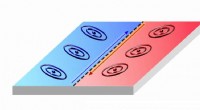
* Electrons have a magnetic moment: Electrons act like tiny magnets with a north and south pole due to their spin. This is called their "magnetic moment."
* Paired electrons: In most materials, electrons are paired up in their orbitals. These pairs have opposite spins, which means their magnetic moments cancel each other out.
* Overall, no net magnetic field: Since the magnetic moments of paired electrons cancel out, the material as a whole has no net magnetic field. It's not magnetic.
Here are some additional factors:
* Atomic structure: The arrangement of electrons in an atom plays a crucial role. Materials with unpaired electrons tend to be magnetic.
* Temperature: Thermal energy can disrupt the alignment of magnetic moments, reducing a material's magnetic properties at higher temperatures.
* External magnetic field: Some materials can be temporarily magnetized by applying an external magnetic field. The magnetic moments align with the field, but they lose their alignment when the field is removed.
Examples of magnetic materials:
* Iron, nickel, cobalt: These materials have unpaired electrons, resulting in a strong magnetic field.
* Rare earth metals: Materials like neodymium and samarium have a very strong magnetic field due to their unique electronic structure.
In summary: The lack of magnetism in most materials is due to the cancellation of magnetic moments from paired electrons. Only materials with unpaired electrons and a specific atomic structure can exhibit strong magnetic properties.