* Reflection: This involves the bouncing of waves off a surface, with the angle of incidence equaling the angle of reflection. There's no bending or spreading of the waves.
* Refraction: This is the bending of waves as they pass from one medium to another (like light entering water). While the direction changes, the waves don't spread out significantly.
* Scattering: Waves can be scattered by particles, changing direction in a random way. This isn't diffraction because the waves don't create clear patterns.
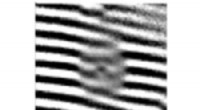
* Interference: This is the interaction of waves, where they can combine constructively (making a larger wave) or destructively (cancelling each other out). While related to diffraction, it's not the same. Diffraction causes the interference patterns, but interference itself isn't diffraction.
* Simple Bending Around Corners: While waves can bend around corners, this is usually a very small effect. Diffraction requires a noticeable spreading of the waves and the formation of interference patterns.
* Compression of a Wave: Compressing a wave (like squeezing a spring) changes its wavelength, but doesn't cause it to diffract.
Key takeaway: Diffraction is a unique phenomenon involving the spreading of waves as they pass through an opening or around an obstacle, leading to the formation of characteristic interference patterns. Any process that doesn't involve this spreading and pattern formation is not diffraction.