Definition:
A force is any interaction that can cause a change in an object's motion. This change could be:
* Starting to move: If an object is at rest, a force can make it move.
* Stopping: A force can bring a moving object to a stop.
* Changing direction: A force can make a moving object change its path.
* Changing speed: A force can make a moving object go faster or slower.
Key Characteristics:
* Vector: Forces have both magnitude (how strong they are) and direction.
* Units: The standard unit for force is the Newton (N).
* Action-Reaction: For every force, there's an equal and opposite force. This is Newton's Third Law of Motion.
Types of Forces:
* Contact forces: These require direct physical contact between objects. Examples include:
* Normal force: The support force that a surface exerts on an object resting on it.
* Friction: A force that opposes motion between two surfaces in contact.
* Applied force: A force that is applied to an object by a person or another object.
* Non-contact forces: These act at a distance without physical contact. Examples include:
* Gravitational force: The force of attraction between any two objects with mass.
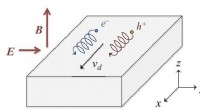
* Electromagnetic force: The force that governs interactions between electrically charged particles.
Understanding Force in Everyday Life:
* Pushing a door open: You apply a force to the door, causing it to rotate on its hinges.
* Lifting a weight: You apply an upward force to overcome the downward force of gravity on the weight.
* A car braking: The brakes apply a force to the wheels, slowing them down.
Important Note:
It's crucial to distinguish between "force" as a scientific concept and its everyday use. In casual speech, people often use "force" to mean something like "effort" or "power," but these are not the same thing as the scientific definition.