Here's a breakdown:
Wave-like properties of light:
* Diffraction: Light bends around obstacles, creating interference patterns.
* Interference: Two light waves can combine to create brighter or darker areas, depending on their phase relationship.
* Polarization: Light waves can vibrate in specific directions, creating polarized light.
* Doppler effect: The frequency of light changes as the source moves towards or away from an observer.
Particle-like properties of light:
* Photoelectric effect: Light can knock electrons off a metal surface, demonstrating that light carries energy in discrete packets.
* Compton scattering: Light can scatter off electrons like billiard balls, changing its wavelength and direction.
The answer to your question:
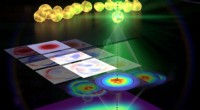
Light has many of the properties of waves, but it can also act as though it is a stream of photons. Photons are tiny packets of energy that represent the particle nature of light.
This wave-particle duality is a fundamental concept in quantum mechanics and helps explain the strange and wonderful behavior of light.