Bulk Motion:
* Mechanism: The entire group of particles moves together in a coordinated fashion. It's like a crowd of people walking down a street.
* Cause: Driven by an external force, like wind, pressure gradient, or a moving container.
* Characteristics:
* Directed: Movement is in a specific direction.
* Collective: All particles move together.
* Fast: Can involve large distances and high speeds.
* Examples:
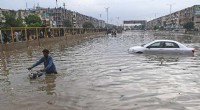
* A river flowing downstream.
* Air blowing across a field.
* A car moving on a road.
Diffusion:
* Mechanism: Particles move randomly, from high concentration areas to low concentration areas. Imagine a drop of dye spreading out in a glass of water.
* Cause: Driven by the random thermal motion of particles and their concentration gradient.
* Characteristics:
* Random: Movement is in all directions.
* Individual: Particles move independently.
* Slow: Occurs over relatively short distances and at lower speeds compared to bulk motion.
* Examples:
* A perfume spreading through a room.
* Sugar dissolving in water.
* The movement of oxygen from the lungs to the blood.
In summary:
| Feature | Bulk Motion | Diffusion |
|--------------|--------------------------|---------------------------|
| Mechanism | Coordinated movement | Random movement |
| Cause | External force | Concentration gradient |
| Direction | Specific | All directions |
| Speed | Fast | Slow |
| Scale | Large distances | Short distances |
Important Note: Sometimes both bulk motion and diffusion can occur simultaneously. For example, the wind can carry pollen particles (bulk motion), and the pollen will also diffuse in the air (diffusion).