Here's why:
* Early Humans and Technology: Early humans used tools and techniques for survival, which we consider rudimentary technology. They didn't necessarily have the scientific understanding behind these inventions, but the need and observation drove their development.
* Science as a Way of Understanding: Science, as we know it, emerged later as a systematic method for understanding the world around us. It built upon the knowledge gained through technological advancements. For example, early astronomers, who were also skilled craftspeople, made instruments like the astrolabe to navigate the stars, which in turn led to further scientific understanding of the universe.
* The Intertwined Relationship: Throughout history, scientific discoveries have paved the way for new technologies. For example, the understanding of electricity led to the development of the electric light bulb. However, the need for a better light source also pushed scientists to investigate electricity.
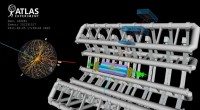
* Modern Era: In the modern era, the relationship is even more intertwined. Scientific discoveries are constantly driving technological advancements (think about the development of computers, smartphones, and the internet), while technological tools are essential for conducting cutting-edge scientific research.
Therefore, it's more accurate to view science and technology as a dynamic and interconnected process, rather than a linear progression of one before the other. Both play crucial roles in shaping the world we know today.