* Surface Roughness: Even surfaces that appear smooth have microscopic bumps and irregularities. When two surfaces rub against each other, these irregularities interlock and resist movement.
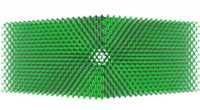
* Intermolecular Forces: At the atomic level, there are attractive forces between molecules of different materials. When surfaces come into contact, these forces can create resistance to sliding.
* Adhesion: In some cases, materials can actually stick together (adhere) due to strong intermolecular forces. This creates a significant frictional force.
* Deformation: As surfaces rub together, they can deform slightly. This deformation contributes to the resistance to motion.
Types of Friction:
* Static Friction: This is the force that prevents an object from moving when it's at rest. It's usually higher than kinetic friction.
* Kinetic Friction: This is the force that opposes the motion of an object that's already moving. It's generally constant, meaning it doesn't change much as long as the surfaces and the speed remain constant.
Factors Affecting Friction:
* Surface roughness: Rougher surfaces create more friction.
* Normal force: The force pressing the surfaces together (the weight of the object). Higher normal force leads to greater friction.
* Material properties: Different materials have different frictional properties.
* Speed: In some cases, friction can be affected by the speed of the object.
Importance of Friction:
Friction is a crucial force in our daily lives:
* Walking: Friction between our shoes and the ground allows us to walk without slipping.
* Braking: Friction between brake pads and rotors brings vehicles to a stop.
* Writing: Friction between the pen and paper allows us to write.
* Heat generation: Friction is responsible for generating heat in many applications, like engines and power tools.
While friction can be beneficial, it can also be a problem in certain situations:
* Wear and tear: Friction can cause surfaces to wear down over time.
* Energy loss: Friction converts kinetic energy into heat, leading to energy loss in machines and systems.
Understanding friction is essential for designing and optimizing various systems and processes in engineering, physics, and everyday life.