Understanding the Basics
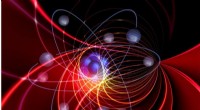
* Atoms: Everything is made of atoms. Atoms have a nucleus (containing protons with positive charge) and electrons orbiting the nucleus (with negative charge). Normally, atoms are electrically neutral; they have an equal number of protons and electrons.
* Electrons: Electrons are the particles that can move relatively easily between atoms.
* Electric Charge: A buildup of either positive or negative charge on an object.
How it Happens
1. Friction: When two objects rub together, some electrons can be "rubbed off" one object and transferred to the other. This happens because the materials have different tendencies to hold onto electrons.
2. Contact: Even without friction, if two objects with different tendencies to hold electrons touch, electrons can move from one to the other until they reach a state of equilibrium.
3. Induction: A charged object can influence the distribution of electrons in a nearby uncharged object without direct contact. This creates a temporary separation of charge in the uncharged object.
Example: Rubbing a Balloon on Your Hair
* Before rubbing: The balloon and your hair are both electrically neutral.
* During rubbing: The balloon's surface tends to attract electrons better than your hair. Electrons from your hair are transferred to the balloon.
* Result: Your hair loses electrons, becoming positively charged. The balloon gains electrons, becoming negatively charged. The attraction between the opposite charges is what makes the balloon stick to your hair.
Key Points
* Charge Conservation: The total amount of charge in a closed system remains constant. If one object gains electrons, another must lose them.
* Static Charge: The buildup of charge is called "static" because the electrons are not flowing continuously like in an electrical current.
Let me know if you'd like more details or have any other questions!