The Basics:
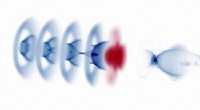
1. Emit a Sound Pulse: A device sends out a pulse of sound waves (usually high-frequency sound or ultrasound).
2. Sound Travels and Reflects: The sound travels through the medium (water, air, etc.) and encounters the object you want to measure. Some of the sound waves are reflected back towards the source.
3. Measure Time: The device measures the time it takes for the sound to travel to the object and back.
4. Calculate Depth: Knowing the speed of sound in the medium, you can calculate the distance (depth) using the following formula:
Depth = (Speed of sound * Time) / 2
* We divide by 2 because the sound travels to the object and back.
Types of Sonar:
* Active Sonar: This is the most common type, where the device both emits and receives the sound waves.
* Passive Sonar: This type only listens for sounds emitted by the target object, like a ship's engine noise.
Applications of Sonar:
* Navigation: Used by ships, submarines, and even some animals (like bats and dolphins) to locate objects and navigate.
* Mapping: Used to create detailed maps of the seafloor, lakes, and even underground structures.
* Fishing: Used to locate fish schools.
* Scientific Research: Used to study marine life, ocean currents, and geological formations.
Beyond Depth Measurement:
Sonar can also provide information about:
* The size and shape of the object.
* The material the object is made of.
* The movement of the object.
Limitations of Sonar:
* Limited range: Sound waves lose energy as they travel, making it difficult to detect objects at very long distances.
* Environmental factors: Factors like temperature, salinity, and currents can affect the speed of sound, making depth calculations less accurate.
* False readings: Echoes from other objects or the surface can create false readings.
Overall, sonar is a powerful tool for measuring depth and gathering other information about the environment. It has a wide range of applications and plays a crucial role in many areas of science, technology, and industry.