Key Principles of the Particle Model:
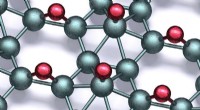
1. Matter is made of particles: Everything around us, from solids to liquids to gases, is composed of these tiny particles.
2. Particles are constantly moving: They are not static but vibrate, rotate, and translate (move from one location to another).
3. Particles have spaces between them: There is empty space between particles, which explains why we can compress gases and liquids.
4. The arrangement and movement of particles determine the state of matter:
* Solids: Particles are closely packed, vibrate in fixed positions, and have a rigid structure.
* Liquids: Particles are closely spaced, vibrate and move around each other, and have a definite volume but no fixed shape.
* Gases: Particles are far apart, move freely and randomly, and have no definite shape or volume.
5. Collisions between particles transfer energy: When particles collide, they transfer energy to each other. This is how heat is transferred through matter.
Applications of the Particle Model:
The particle model explains a wide range of phenomena, including:
* States of matter: Understanding the differences between solids, liquids, and gases.
* Thermal expansion: How materials expand when heated, due to increased particle movement.
* Diffusion: How particles spread out, like perfume diffusing in air.
* Pressure: How gas pressure arises from the collisions of particles with the walls of a container.
* Phase changes: How matter changes between solid, liquid, and gaseous states.
Limitations of the Particle Model:
The particle model is a simplification and does not explain all aspects of matter. For example, it does not account for:
* Subatomic particles: The model focuses on atoms and molecules, but these are composed of even smaller particles like protons, neutrons, and electrons.
* Quantum effects: At very small scales, particles exhibit wave-like behavior, which the particle model doesn't fully address.
Overall, the particle model is a valuable tool for understanding the nature of matter and many of its properties. It provides a foundation for further scientific exploration and the development of more sophisticated models.