1. It's based on evidence: Theories are built upon a vast body of observations, experiments, and data that have been repeatedly tested and verified. This evidence provides strong support for the theory's explanation.
2. It's explanatory: Theories go beyond simply describing phenomena; they attempt to explain why these phenomena occur. They provide a framework for understanding and predicting natural events.
3. It's predictive: Theories are not just descriptive; they make predictions about future observations or experiments. These predictions can then be tested to further validate or refine the theory.
4. It's falsifiable: A key characteristic of scientific theories is that they are potentially falsifiable. This means that there must be a conceivable observation or experiment that could disprove the theory. If a theory can't be falsified, it's not truly scientific.
5. It's constantly evolving: Theories are not static; they are constantly being refined and updated as new evidence emerges. This process of refinement strengthens the theory and leads to a deeper understanding of the natural world.
Important note: Scientific theories are not "guesses" or "hunches." They are the most robust explanations we have for natural phenomena, supported by a wealth of evidence and subject to ongoing testing and refinement.
Examples of scientific theories:
* Theory of evolution: Explains the diversity of life on Earth through natural selection and descent from common ancestors.
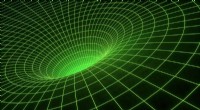
* Theory of relativity: Explains gravity and the relationship between space, time, and mass.
* Cell theory: Explains that all living organisms are made up of cells.
* Plate tectonics theory: Explains the movement of Earth's lithosphere and the formation of continents and oceans.
These theories are not "just theories" in the sense that they are uncertain or unproven. They are well-established explanations of the natural world, backed by vast amounts of evidence.