Depth and temperature play distinct roles in influencing pressure, and their effects can sometimes be intertwined. Here's a breakdown:
Depth:
* Directly proportional to pressure: The deeper you go in a fluid (like water or air), the greater the pressure. This is due to the weight of the fluid above pressing down on the point of interest.
* Hydrostatic pressure: The pressure exerted by a fluid at rest is known as hydrostatic pressure. This pressure is calculated using the formula: P = ρgh, where:
* P is the pressure
* ρ is the density of the fluid
* g is the acceleration due to gravity
* h is the depth
* Examples: The pressure at the bottom of a swimming pool is greater than at the surface. The pressure at the bottom of the ocean is significantly higher than at the surface due to the immense weight of water above.
Temperature:
* Indirectly proportional to pressure (for gases): In gases, an increase in temperature causes the molecules to move faster, colliding with each other and the container walls more frequently. This increased kinetic energy translates to higher pressure.
* Ideal Gas Law: This relationship is explained by the Ideal Gas Law: PV = nRT, where:
* P is the pressure
* V is the volume
* n is the number of moles of gas
* R is the ideal gas constant
* T is the temperature in Kelvin
* Constant volume: If the volume is kept constant, an increase in temperature will directly lead to an increase in pressure.
* Liquids and solids: Temperature has a less significant effect on pressure in liquids and solids compared to gases.
Combined effects:
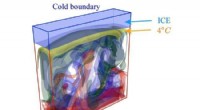
* Depth and temperature in water: While temperature changes in water are less dramatic than in air, they do affect density. Warmer water is less dense than colder water, leading to slightly lower pressure at a given depth.
* Depth and temperature in air: Air pressure decreases with altitude (depth in the atmosphere). However, the temperature gradient in the atmosphere is complex and can vary depending on factors like latitude, season, and time of day. This makes the combined effect of depth and temperature on air pressure more intricate.
In summary:
* Depth: Has a direct and significant impact on pressure, increasing proportionally with depth.
* Temperature: Has a less direct effect on pressure, primarily in gases where it increases pressure with increasing temperature.
It is important to remember that both depth and temperature influence pressure in complex ways, often interacting with other factors like density, gravity, and the state of matter.