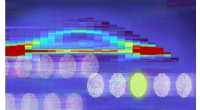
Quantum tunneling is a bizarre phenomenon where a particle can pass through a potential barrier even if it doesn't have enough energy to do so classically. This sounds impossible according to classical physics, but it's a well-established part of quantum mechanics.
Here's the breakdown:
* Classical Physics: Imagine a ball rolling towards a hill. If the ball doesn't have enough energy to climb the hill, it will simply stop at the base.
* Quantum Mechanics: Quantum particles, like electrons, are described by wave functions. This means they have a probability of being found in certain locations. When encountering a barrier, the wave function doesn't simply stop, but decays exponentially within the barrier.
* The Tunnel: There's a non-zero probability that the wave function will "leak" through the barrier, and the particle will appear on the other side, as if it "tunnelled" through.
Factors Affecting Tunneling:
* Barrier height: Higher barriers lead to lower tunneling probabilities.
* Barrier width: Wider barriers also result in lower tunneling probabilities.
* Particle energy: Higher energy particles have a higher chance of tunneling.
* Particle mass: Lighter particles tunnel more easily.
Real-world examples:
* Nuclear fusion: Protons in the sun overcome electrostatic repulsion through tunneling, fusing to form helium and releasing energy.
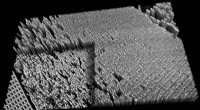
* Scanning Tunneling Microscope (STM): This instrument uses tunneling current to create incredibly detailed images of surfaces at atomic scale.
* Diodes and transistors: These electronic components rely on tunneling for their operation.
The Bottom Line:
Quantum tunneling is a counterintuitive but well-established quantum phenomenon where particles can pass through seemingly insurmountable barriers, challenging our classical understanding of physics. It has profound implications for various fields, from astrophysics to electronics, and it continues to fascinate scientists and researchers alike.