Here's why:
* The speed of light is the ultimate speed limit: Light travels at approximately 299,792,458 meters per second in a vacuum. This speed is constant for all observers, regardless of their relative motion.
* Massive objects can't reach the speed of light: As an object approaches the speed of light, its mass increases infinitely. This means an infinite amount of energy would be required to accelerate it to the speed of light, which is impossible.
* Information cannot travel faster than light: Special relativity also states that information cannot travel faster than light. This means that no signal, message, or effect can travel faster than light.
Some things can appear to be faster than light:
* Superluminal motion: Some objects, like jets of particles emitted from quasars, can appear to move faster than light. However, this is an illusion caused by their motion relative to the observer and the geometry of their path. The objects themselves are not actually moving faster than light.
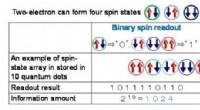
* Quantum entanglement: In quantum entanglement, two particles can be linked in a way that changes in one particle instantaneously affect the other, even if they are separated by vast distances. This might seem to violate the speed of light limit, but it doesn't actually involve information transfer.
In conclusion, nothing can travel faster than the speed of light in a vacuum. This is a fundamental law of physics, and it has been confirmed by countless experiments.