* Proportional to the product of their masses: The more massive the objects, the stronger the gravitational force.
* Inversely proportional to the square of the distance between their centers: The farther apart the objects are, the weaker the gravitational force.
Here are some demonstrations of this law:
1. Objects falling to the ground: The most common demonstration is simply observing objects falling to the ground. This is due to the gravitational attraction between the object and the Earth.
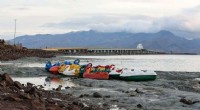
2. Tides: The tides are caused by the gravitational pull of the Moon and the Sun on the Earth's oceans. The Moon's gravity is stronger on the side of the Earth closest to it, causing the water to bulge out.
3. Orbits of planets and moons: Planets and moons orbit stars and planets, respectively, due to the gravitational attraction between them. The elliptical orbits are a consequence of the inverse square law of gravity.
4. Gravitational lensing: The bending of light by massive objects like stars and galaxies is another demonstration of gravity. This phenomenon occurs because the massive object's gravity warps the fabric of spacetime, causing light to follow a curved path.
5. Satellites: Artificial satellites orbiting the Earth are held in their orbits by the Earth's gravity. They are constantly falling towards the Earth, but their horizontal velocity keeps them from crashing.
6. Pendulums: While not a direct demonstration of the universal law, pendulums demonstrate the influence of gravity on the period of oscillation. The period of a pendulum is dependent on the acceleration due to gravity.
7. Cavendish Experiment: The Cavendish experiment, conducted in 1798, was a groundbreaking experiment that directly measured the gravitational force between two lead spheres. This provided the first direct evidence of the universal law of gravity.
These examples illustrate how the universal law of gravity is a fundamental force that governs the motion of objects in the universe. It is responsible for the formation of galaxies, stars, and planets, as well as for the tides, orbits, and the very existence of life on Earth.