Here's why:
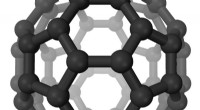
* Protons determine the element: The number of protons in an atom defines what element it is. For example, all carbon atoms have 6 protons.
* Neutrons affect isotopes: The number of neutrons can vary within an element, creating isotopes. For example, carbon-12 has 6 neutrons, while carbon-14 has 8 neutrons.
* Stability and radioactivity: The ratio of protons to neutrons plays a role in the stability of an atom. Some isotopes are stable, while others are radioactive.
Here's a simple analogy: Imagine you have a seesaw. The protons are on one side, and the neutrons are on the other. For the seesaw to be balanced, the number of protons and neutrons doesn't have to be the same. It just needs to be in a ratio that makes it stable.
In summary: While the number of protons defines the element, the number of neutrons can vary within an element, creating isotopes with different properties. The ratio of protons to neutrons plays a role in the stability and radioactivity of an atom.