1. Explanation of Movement: The particle model explains diffusion by stating that particles are constantly moving and colliding with each other. In areas of high concentration, particles are more crowded, leading to more frequent collisions and a higher chance of particles moving to areas of lower concentration. This explains the observed movement of particles from high to low concentration.
2. Rate of Diffusion: The rate of diffusion is dependent on factors like temperature and the size of the particles. This observation is consistent with the particle model:
* Temperature: Higher temperatures lead to faster particle movement, resulting in faster diffusion. This is because increased temperature means more kinetic energy for the particles.
* Particle Size: Smaller particles diffuse faster than larger particles. This is because smaller particles have a higher surface area to volume ratio, allowing them to interact with the surrounding environment more readily.
3. Diffusion in Different States of Matter: Diffusion occurs in all states of matter, though the rate varies significantly.
* Gases: Diffusion is fastest in gases because particles are far apart and move freely.
* Liquids: Diffusion is slower in liquids because particles are closer together and experience more collisions.
* Solids: Diffusion is slowest in solids because particles are tightly packed and have very limited movement.
4. Diffusion as a Random Process: Diffusion is not a directed movement of particles. Instead, it's a random process driven by the constant motion of particles. This randomness is inherent in the particle model, where particles move in unpredictable directions.
5. Observation of Diffusion: We can directly observe diffusion in various scenarios:
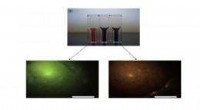
* A drop of ink in water: The ink spreads throughout the water, demonstrating the movement of ink particles from high concentration to low concentration.
* The smell of perfume: The scent of perfume diffuses through the air, reaching our noses.
* The mixing of gases: When different gases are introduced into a container, they eventually mix evenly due to diffusion.
In conclusion, diffusion is a direct consequence of the constant motion of particles as described by the particle model. The rate, pattern, and occurrence of diffusion in different states of matter are consistent with the fundamental principles of the particle model.