Here's a breakdown of how it works:
* The Tip: The tip is incredibly sharp, often with a radius of curvature of just a few nanometers. This allows it to interact with individual atoms on the surface being scanned.
* The Cantilever: The cantilever is a tiny beam that vibrates at a specific frequency. The tip is attached to the end of the cantilever.
* Scanning: The AFM scans the surface by moving the tip across it in a raster pattern.
* Interaction: As the tip encounters features on the surface, it experiences forces (Van der Waals forces, electrostatic forces, etc.).
* Detection: These forces cause the cantilever to bend or deflect. This deflection is detected by a laser beam reflected off the back of the cantilever onto a sensor.
* Image Formation: The sensor detects the changes in the reflected laser beam, which are then used to construct an image of the surface.
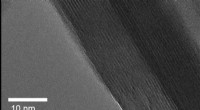
The AFM's ability to image surfaces at the atomic level is due to the incredibly sharp tip and the sensitivity of the cantilever and detection system.