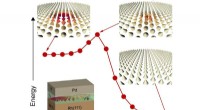
Here's why:
* The Third Law states that the entropy of a perfect crystal at absolute zero is zero. This means that there is no disorder or randomness in the system at this temperature.
* To reach absolute zero, you would need to remove all thermal energy from a system. However, the Third Law implies that there is always some residual energy, even at the lowest possible temperature.
* This residual energy is related to the quantum nature of matter. Even at absolute zero, particles have zero-point energy, which is the minimum energy they can possess.
* Therefore, it is impossible to completely remove all energy from a system, and thus impossible to reach absolute zero.
While it's impossible to reach absolute zero, scientists can get incredibly close. The current record for the coldest temperature ever achieved in a laboratory is just a fraction of a billionth of a degree above absolute zero.