Classical Physics:
* Mechanics: Studies motion and its causes (forces, energy, work). Includes kinematics (describing motion) and dynamics (explaining motion).
* Thermodynamics: Deals with heat, temperature, energy transfer, and entropy.
* Electromagnetism: Explores the relationship between electricity and magnetism, including electric and magnetic fields, waves, and circuits.
* Optics: Focuses on the behavior and properties of light, including reflection, refraction, diffraction, and interference.
* Acoustics: Studies sound waves and their properties, including propagation, reflection, and interference.
Modern Physics:
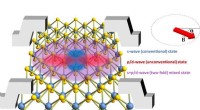
* Quantum Mechanics: Deals with the behavior of matter and energy at the atomic and subatomic level. It introduces concepts like wave-particle duality, quantization, and uncertainty.
* Relativity: Developed by Albert Einstein, it describes the relationship between space, time, gravity, and motion at high speeds. It includes special relativity (dealing with uniform motion) and general relativity (dealing with gravity).
* Nuclear Physics: Studies the structure, properties, and interactions of atomic nuclei. It explores topics like radioactivity, nuclear fusion, and fission.
* Particle Physics: Investigates the fundamental building blocks of matter and their interactions. It aims to understand the origins of mass, force, and the universe.
* Astrophysics: Applies physics to study celestial objects and phenomena. It encompasses topics like stars, galaxies, black holes, and the evolution of the universe.
Other Areas:
* Biophysics: Applies physics to biological systems, exploring the physical principles behind life processes.
* Geophysics: Applies physics to understand the Earth's structure, composition, and processes.
* Plasma Physics: Studies the behavior of ionized gases, which are found in stars, lightning, and fusion reactors.
* Materials Science: Uses physics to understand the properties of materials and to design new materials with desired properties.
It's important to note that these areas are interconnected and often overlap. For example, quantum mechanics is essential for understanding nuclear physics, and astrophysics relies on principles from both classical and modern physics.
This is just a glimpse into the vast and fascinating world of physics. There are many other specialized areas within physics, and research is constantly expanding our understanding of the universe.