Here are some key areas of nuclear physics:
* Structure of the Nucleus: Understanding how protons and neutrons interact and are arranged within the nucleus.
* Nuclear Reactions: Studying how nuclei change through processes like radioactive decay, nuclear fission, and nuclear fusion.
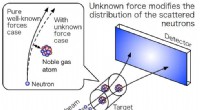
* Nuclear Forces: Investigating the strong and weak nuclear forces that bind protons and neutrons together.
* Nuclear Energy: Exploring the use of nuclear reactions for generating electricity (nuclear power) and developing nuclear weapons.
* Nuclear Astrophysics: Applying nuclear physics principles to understand stars, supernovae, and other astrophysical phenomena.
Nuclear physics has a wide range of applications, including:
* Medicine: Radioactive isotopes used in medical imaging and treatment.
* Industry: Radioactive isotopes for industrial processes like gauging thickness or tracing materials.
* Agriculture: Radioactive isotopes for pest control and crop improvement.
* Archaeology: Radiocarbon dating to determine the age of ancient artifacts.