Materials:
* Sodium acetate solution (saturated)
* Beaker
* Stirring rod
* Ice bath
* Seed crystal (small piece of sodium acetate)
Procedure:
1. Cooling the solution: Heat the sodium acetate solution to boiling, then allow it to cool to room temperature.
2. Formation of "hot ice": Carefully place a seed crystal into the cooled solution. Observe the reaction.
3. Observing the properties of "hot ice": Touch the "hot ice" and note its temperature. Observe its appearance and texture.
Observations:
Initial state:
* The sodium acetate solution appears clear and colorless.
* The solution is initially at room temperature.
Upon introduction of the seed crystal:
* The solution rapidly crystallizes, forming a solid mass.
* The crystallization process is exothermic, releasing heat. This can be felt by touching the beaker.
* The "hot ice" feels warm or even hot to the touch, despite being solid.
Properties of "hot ice":
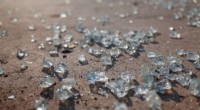
* The "hot ice" is solid and opaque.
* It has a crystalline structure.
* The "hot ice" is significantly warmer than regular ice.
* The solid "hot ice" can remain in this state for a long time, unlike regular ice that melts quickly at room temperature.
Observations during the experiment:
* The speed of crystallization varies depending on the size of the seed crystal and the temperature of the solution.
* The crystals can form various shapes and sizes.
* The "hot ice" may melt slowly over time, especially if exposed to higher temperatures.
Overall:
The "hot ice" experiment demonstrates the phenomenon of supersaturation and the exothermic nature of crystallization. By creating a supersaturated solution and introducing a seed crystal, we trigger the formation of a solid, crystalline structure that releases heat and maintains a relatively high temperature.
Important Note: These observations are general; individual results may vary depending on specific experimental conditions and the quality of the sodium acetate solution.