1. Creating a Vacuum: The dropping tube is essentially a large, airtight chamber with a vacuum pump attached. Before anything is dropped, the pump removes nearly all the air from the chamber, creating a near-vacuum.
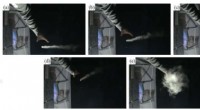
2. Free Fall: When an object is dropped into the vacuum, it falls with very little air resistance. This means it experiences nearly pure acceleration due to gravity, making the fall much faster and smoother than it would be in regular air.
3. Why Air Pressure Matters: Air resistance is a significant force that slows objects down in normal atmospheric conditions. Air molecules collide with the falling object, creating friction. By removing the air, the dropping tube drastically reduces this resistance, allowing the object to fall with near-perfect free-fall motion.
In summary, a dropping tube doesn't use air pressure to function. It actually works by *removing* air pressure to create a vacuum, which allows objects to fall freely without the influence of air resistance.