Factors affecting Earth's rotation speed:
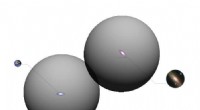
* Gravitational Interactions: The gravitational pull of the Moon and Sun creates tides. These tides create friction, which slightly slows Earth's rotation over millions of years.
* Earthquakes and Volcanic Eruptions: These events can shift the Earth's mass distribution, which can subtly affect its rotation speed.
* Climate Change: The melting of glaciers and ice sheets can redistribute mass on Earth, impacting rotation.
* Atmospheric and Oceanic Currents: The movement of air and water masses can also exert small forces that slightly influence Earth's spin.
* Core Dynamics: Changes in the Earth's molten core can also play a role in altering rotation speed, though the precise mechanisms are complex.
How much change?
* Long-Term Trend: The dominant influence is the Moon's gravity slowing Earth's rotation by a few milliseconds per century. This means days are getting longer, but at a rate too slow to notice in a lifetime.
* Short-Term Variations: Earth's rotation can fluctuate by milliseconds in a day due to the factors mentioned above. These fluctuations are more noticeable through precise atomic clocks.
Will Earth ever stop spinning?
* No, Earth won't completely stop spinning in our lifetime or even for many billions of years. The slowing effect is very gradual.
* The Sun will likely become a red giant before Earth's rotation slows down significantly.
Key Takeaway:
Earth's rotation is not a perfectly constant speed. It experiences subtle changes due to various gravitational, geological, and atmospheric factors. While these changes are very gradual, they are measurable and have implications for our understanding of Earth's dynamics.