Here's how it works:
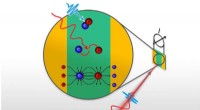
* Atomic Structure: All matter is made of atoms, which have a central nucleus containing protons (positive charge) and neutrons (no charge). Surrounding the nucleus are electrons (negative charge).
* Friction and Electron Transfer: When two materials are rubbed together, the friction creates heat and causes some electrons to be transferred from one material to the other.
* Charging: The material that loses electrons becomes positively charged because it now has more protons than electrons. The material that gains electrons becomes negatively charged because it now has more electrons than protons.
Example:
* When you rub a balloon on your hair, the friction causes electrons to be transferred from your hair to the balloon. This makes your hair positively charged and the balloon negatively charged. The opposite charges attract, which is why the balloon sticks to your hair.
Note: The tendency for a material to lose or gain electrons during friction depends on its triboelectric series, which ranks materials according to their tendency to become positive or negative when rubbed against each other.