* Equilibrium is dynamic, not static: Equilibrium doesn't mean everything stops. It means the *rates* of the forward and reverse processes are equal.
* Imagine a chemical reaction where reactants turn into products. At equilibrium, the rate of product formation is the same as the rate of reactants reforming.
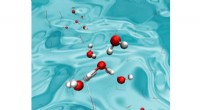
* Particles always have kinetic energy: Even at absolute zero (which is unattainable), particles have a tiny amount of vibrational energy. At normal temperatures, particles are constantly moving, colliding, and changing their energy states.
Think of it like this: Imagine a crowded room with people entering and leaving at the same rate. Even though the number of people in the room remains constant, people are still moving around. Similarly, at equilibrium, particles are constantly moving and changing, but the overall distribution of particles remains constant.
Here's what doesn't happen at equilibrium:
* No net change: While individual particles are moving, there is no overall change in the system's properties like concentration, pressure, or temperature.
* No further energy exchange: The system has reached a state where it is no longer exchanging energy with its surroundings.
Let me know if you have any more questions!