Theoretical Limits:
* The Speed of Light: This is the ultimate speed limit in the universe, approximately 299,792,458 meters per second (m/s). Nothing with mass can reach this speed, as it would require infinite energy.
* The Planck Length: This is the smallest possible distance in the universe, about 1.616 x 10^-35 meters. While not directly related to velocity, it suggests that at extremely small scales, our understanding of space and time breaks down, and the concept of velocity as we know it may become meaningless.
Practical Limits:
* Energy and Resources: Accelerating an object to high speeds requires vast amounts of energy. This is a major limiting factor for practical applications.
* Friction and Resistance: Objects moving through air or other mediums encounter resistance, which slows them down. This effect becomes more significant at higher speeds.
* Material Strength: Objects can only withstand a certain amount of force before they break apart. This limits the acceleration and therefore the maximum speed that can be achieved.
Examples:
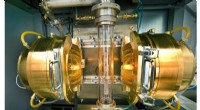
* Particle accelerators: These machines can accelerate particles to speeds very close to the speed of light.
* Spacecraft: The fastest spacecraft ever built, the Parker Solar Probe, has reached speeds of over 430,000 miles per hour (692,000 km/h) relative to the Sun.
* Earth's orbital speed: Our planet orbits the Sun at an average speed of 67,000 miles per hour (108,000 km/h).
In summary, while the theoretical limit for velocity is the speed of light, practical limitations prevent us from reaching speeds close to that. However, we continue to push the boundaries of velocity with advancements in technology.