Here's why:
* Atoms: Everything is made of atoms. Atoms have a neutral charge because they contain an equal number of protons (positive charge) and electrons (negative charge).
* Insulators: Most wall materials are insulators. Insulators don't allow electrons to flow freely through them. This means that while electrons might be present, they are bound to their atoms and can't easily move around to create a net charge.
However, a wall can become charged in a few ways:
* Static Electricity: If you rub a wall vigorously with certain materials, you can transfer electrons and create a static charge. This is why you might get a shock from a door handle after walking across a carpeted floor.
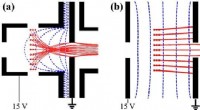
* Electric Fields: If a strong electric field is applied to a wall, it might become polarized. This means that the positive and negative charges within the wall's atoms might be slightly shifted, creating a small temporary charge.
So, while a wall isn't inherently charged, it can be charged under certain conditions.