* Everything with mass has gravity: All objects with mass exert a gravitational force on each other. This force is what keeps us on the Earth, and it's what holds planets in orbit around stars. Even though helium is a very light element, its mass still contributes to the overall gravity of the universe.
* Mass is a measure of inertia: Inertia is the tendency of an object to resist changes in its motion. The more mass an object has, the harder it is to start it moving, stop it, or change its direction. So, even though helium is a gas, its mass means it's not completely weightless and it still has some inertia.
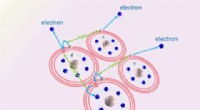
* Helium is not massless: Helium atoms, like all other atoms, are composed of protons, neutrons, and electrons. These particles have mass, and therefore, the helium atom as a whole has mass.
* Helium's mass is relevant in various applications: The fact that helium has mass is important for things like:
* Lifting balloons: Helium is less dense than air, meaning it has less mass for the same volume. This is why helium-filled balloons float.
* Nuclear fusion: Helium is a product of nuclear fusion, and its mass plays a role in the energy released during these reactions.
* Particle physics: Helium is used in experiments to study fundamental particles, and its mass is important for understanding their interactions.
In short, helium having mass is a fundamental property that influences its behavior and interactions in the world.