Mechanical principles in biomechanics are the fundamental laws of physics applied to the study of human movement. They help us understand how forces interact with the body, how muscles generate motion, and how movement is optimized for efficiency and safety.
Here's a breakdown of key mechanical principles relevant to biomechanics:
1. Newton's Laws of Motion:
* Newton's First Law (Inertia): An object at rest stays at rest, and an object in motion stays in motion with the same speed and in the same direction unless acted upon by an unbalanced force. In biomechanics, this helps us understand how the body resists changes in motion.
* Newton's Second Law (Acceleration): The acceleration of an object is directly proportional to the net force acting on it and inversely proportional to its mass. This explains how forces produce changes in movement, like throwing a ball or jumping.
* Newton's Third Law (Action-Reaction): For every action, there is an equal and opposite reaction. This principle is crucial for understanding ground reaction forces, how the body interacts with surfaces, and how forces are transmitted through the body.
2. Kinematics and Kinetics:
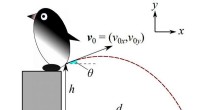
* Kinematics: Describes the motion of a body, including its displacement, velocity, and acceleration, without considering the forces involved.
* Kinetics: Deals with the forces that cause motion, like muscle force, gravity, and friction.
3. Other Important Concepts:
* Torque: The rotational equivalent of force, which determines the angular acceleration of an object.
* Leverage: The mechanical advantage gained by using tools or body parts to amplify force. This concept is fundamental to understanding how muscles move bones and how movement is efficiently produced.
* Center of Gravity (COG): The point where the weight of an object is concentrated. Knowing a body's COG is crucial for understanding balance, stability, and how forces affect the body.
* Linear Momentum: The product of mass and velocity, representing the amount of motion an object possesses. Understanding momentum helps analyze impacts and how energy is transferred during movement.
* Angular Momentum: The rotational equivalent of linear momentum, representing an object's tendency to continue rotating.
4. Application in Biomechanics:
These mechanical principles are applied in various areas of biomechanics, including:
* Human Movement Analysis: Understanding how the body moves, identifying the forces involved, and analyzing movement efficiency.
* Sports Biomechanics: Optimizing performance in different sports by using the principles of motion, force, and leverage.
* Rehabilitation: Developing rehabilitation programs by understanding the biomechanics of injuries and recovery.
* Ergonomics: Designing workplaces and equipment to reduce risk of injury by applying biomechanical principles to minimize strain and improve work efficiency.
By understanding these mechanical principles, we can gain a deeper understanding of human movement and develop strategies for improving performance, preventing injury, and optimizing human function.