Here's why:
* Constant Speed: Light travels at a constant speed in a vacuum, which is approximately 299,792,458 meters per second (approximately 186,282 miles per second). This speed is denoted by the symbol 'c'.
* Special Relativity: Einstein's theory of special relativity states that the speed of light in a vacuum is the same for all observers, regardless of their own motion. This means that light doesn't speed up or slow down based on the motion of the source or the observer.
* Changes in Medium: While light travels at a constant speed in a vacuum, its speed can change when it passes through different mediums (like water, glass, or air). However, this isn't acceleration in the traditional sense. It's more about the light waves interacting with the atoms of the medium, causing them to slow down.
So, what happens instead of acceleration?
Light can change its:
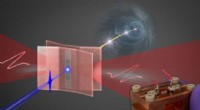
* Direction: Light can be reflected (bouncing off a surface) or refracted (bending as it passes from one medium to another).
* Frequency and Wavelength: When light travels through different mediums, its frequency remains constant, but its wavelength can change. This is why light bends when it enters water, for example.
In short, light doesn't accelerate in the way we typically understand acceleration. It travels at a constant speed in a vacuum and experiences changes in direction and wavelength when it interacts with different mediums.