Here's a breakdown:
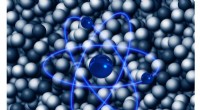
* Protons: Positively charged particles found in the nucleus of an atom.
* Electrons: Negatively charged particles that orbit the nucleus.
* Neutral Object: An object with an equal number of protons and electrons has a net charge of zero, meaning it's electrically neutral.
* Charged Object: An object with an imbalance of protons and electrons has a net electric charge.
* Positive Charge: More protons than electrons.
* Negative Charge: More electrons than protons.
Here's how it works:
* Gaining Electrons: An object gains a negative charge if it gains electrons, as electrons are negatively charged.
* Losing Electrons: An object gains a positive charge if it loses electrons.
* Static Electricity: This is a common example of charge imbalance. When you rub a balloon on your hair, electrons transfer from your hair to the balloon, leaving the balloon negatively charged and your hair positively charged.
Importance:
Electric charge is a fundamental concept in physics and plays a vital role in various phenomena:
* Electricity: Flow of electrons due to a difference in charge.
* Magnetism: Moving electric charges create magnetic fields.
* Chemical Bonding: The interaction of atoms involves the transfer or sharing of electrons, creating charged particles.
Let me know if you have any more questions about electric charge!