* Particles with negative charge: These are called anions. Common examples include:
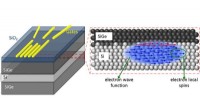
* Electrons: These are fundamental particles that orbit the nucleus of an atom and have a negative charge.
* Ions: Atoms that have gained one or more electrons become negatively charged ions. For example, a chloride ion (Cl-) has gained an extra electron.
* Particles with positive charge: These are called cations. Common examples include:
* Protons: These are fundamental particles found in the nucleus of an atom and have a positive charge.
* Ions: Atoms that have lost one or more electrons become positively charged ions. For example, a sodium ion (Na+) has lost one electron.
* Particles with no charge: These are called neutral particles. A common example is:
* Neutrons: These are fundamental particles found in the nucleus of an atom and have no charge.
In summary:
* Not all particles carry a negative charge.
* Some particles are negatively charged (anions), some are positively charged (cations), and some are neutral.
* The charge of a particle is determined by the number of protons and electrons it contains.