Here's a breakdown:
Solid:
* Arrangement: Particles are tightly packed in a regular, repeating pattern (crystal lattice).
* Movement: Vibrate in fixed positions, with limited movement.
* Shape: Definite shape.
* Volume: Definite volume.
* Compressibility: Very low compressibility.
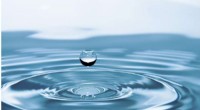
Liquid:
* Arrangement: Particles are close together, but less organized than solids.
* Movement: Move around freely, but stay close together.
* Shape: Takes the shape of the container.
* Volume: Definite volume.
* Compressibility: Slightly compressible.
Gas:
* Arrangement: Particles are far apart and randomly arranged.
* Movement: Move rapidly and independently, with high kinetic energy.
* Shape: Takes the shape of the container.
* Volume: Fills the entire container.
* Compressibility: Highly compressible.
Here's a simple analogy:
* Solid: Imagine a packed box of marbles. They can only vibrate slightly in place.
* Liquid: Imagine a bag of marbles. They can move around, but stay close together.
* Gas: Imagine marbles scattered across a room. They move freely in all directions.
Key differences:
* Density: Solids are the densest, followed by liquids, and then gases.
* Diffusion: Gases diffuse most easily, followed by liquids, and then solids.
* Thermal expansion: Gases expand the most when heated, followed by liquids, and then solids.
Important note:
These are simplified descriptions. The states of matter are not always distinct, and there can be intermediate states, such as plasmas and superfluids.