Directly measured by acceleration:
* Change in speed: How quickly something speeds up or slows down.
* Change in direction: How quickly something changes direction. This is often referred to as *centripetal acceleration*.
Indirectly measured by acceleration:
* Force: Through Newton's Second Law of Motion (F = ma), acceleration is directly proportional to force. So, by measuring acceleration, you can infer the force acting on an object.
* Displacement: If you know the initial velocity, acceleration, and time, you can calculate the displacement (change in position) of an object.
* Work and Energy: Acceleration is involved in the calculations of work and energy, as it's related to changes in kinetic energy.
Examples of things measured by acceleration:
* A car accelerating from 0 to 60 mph: Measures the rate of change in speed.
* A ball thrown in a circular motion: Measures the acceleration towards the center of the circle (centripetal acceleration).
* A rocket launching into space: Measures the acceleration due to the force of the engines.
* A person jumping off a diving board: Measures the acceleration due to gravity.
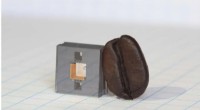
Important Note: While acceleration is a fundamental concept, it's usually not directly measured. Instead, devices like accelerometers measure changes in motion, which can then be interpreted to calculate acceleration.