Research and Development:
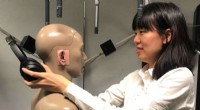
* Conducting experiments: This could involve setting up and running experiments, collecting and analyzing data, and writing reports.
* Developing new theories and models: Physicists use their knowledge of physics to explain observed phenomena and to predict new ones.
* Simulating physical systems: This might involve using computer programs to model complex systems, such as the climate or the behavior of particles.
* Writing research papers and proposals: This is an important part of communicating their findings to the scientific community and obtaining funding for future research.
Teaching and Education:
* Teaching undergraduate and graduate courses: Physicists may teach courses in various areas of physics, such as mechanics, electromagnetism, or quantum mechanics.
* Supervising students: Physicists may supervise students working on their research projects.
* Developing new teaching materials: This might involve creating textbooks, laboratory exercises, or online learning resources.
Other Activities:
* Attending conferences and seminars: This is a great way for physicists to stay up-to-date on the latest research and to network with other scientists.
* Collaborating with other researchers: Physicists often work in teams, sharing their expertise and resources.
* Communicating their research to the public: This might involve giving presentations, writing articles, or creating websites.
* Applying their knowledge to real-world problems: This could involve working in industry, government, or other areas where physics can be used to solve problems.
Examples of Typical Day Activities:
* A theoretical physicist: Might spend their day developing mathematical models, running computer simulations, and writing papers on their findings.
* An experimental physicist: Might spend their day setting up and running an experiment, collecting data, and analyzing results.
* A physics professor: Might spend their day teaching classes, meeting with students, and working on their research.
It's important to note that this is just a general overview, and a physicist's workday can vary greatly depending on their specific role and area of expertise.