1. Change in Speed: Light travels at different speeds in different mediums. It travels fastest in a vacuum and slower in denser mediums like water or glass. When light enters a denser medium, it slows down.
2. Change in Direction: The change in speed causes the light ray to change direction. Since the light slows down as it enters a denser medium, the ray bends towards the normal (an imaginary line perpendicular to the surface of the medium). Conversely, when light enters a less dense medium, it speeds up and bends away from the normal.
3. Snell's Law: This law describes the relationship between the angle of incidence (the angle at which light strikes the surface), the angle of refraction (the angle at which light bends), and the refractive indices of the two mediums. The refractive index is a measure of how much light slows down in a particular medium.
In simpler terms: Imagine a car driving on a smooth road and then suddenly entering a muddy field. The car will slow down and change its direction slightly due to the change in surface. Similarly, light rays slow down and change direction when they enter a denser medium.
Here are some examples of refraction:
* A straw in a glass of water appears bent: This is because the light rays from the straw bend as they pass from the water to the air, making the straw look like it's at a different angle.
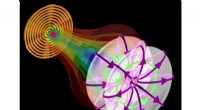
* A rainbow: Sunlight is refracted as it enters and leaves raindrops, separating the different colors of light.
* A magnifying glass: The curved surface of a magnifying glass refracts light rays to focus them on a point, making objects appear larger.
Refraction plays a crucial role in many optical instruments like telescopes, microscopes, and cameras.