Classical Mechanics:
* Laws of Motion: Newton formulated the three laws of motion, which describe the relationship between force, mass, and acceleration. These laws are fundamental to understanding how objects move and interact.
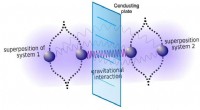
* Law of Universal Gravitation: This law states that every particle in the universe attracts every other particle with a force proportional to the product of their masses and inversely proportional to the square of the distance between their centers. This law explained the motion of planets and the falling of objects on Earth.
* Calculus: Though Newton and Gottfried Wilhelm Leibniz are credited with its independent discovery, calculus provided the mathematical tools necessary to analyze and describe motion, force, and other physical phenomena.
Optics:
* Theory of Light: Newton conducted experiments with prisms and lenses, demonstrating that white light is composed of a spectrum of colors. He proposed that light was made of tiny particles called corpuscles, which later proved to be incorrect.
* Reflecting Telescope: Newton designed the first practical reflecting telescope, which used a concave mirror instead of a lens to gather light. This design overcame limitations of refracting telescopes that caused chromatic aberration.
Other Contributions:
* Newton's Method: This numerical method is used to find approximate solutions to equations.
* Study of Heat and Sound: Newton made significant contributions to understanding the nature of heat and sound, though his theories were later refined.
* Contributions to Astronomy: His work on gravity helped explain the tides, the precession of the equinoxes, and other astronomical phenomena.
Impact and Legacy:
Newton's work established a framework for understanding the physical world that has remained influential for centuries. His discoveries paved the way for further advancements in physics and other scientific fields. His impact on our understanding of the universe, the laws of motion, and gravity continues to shape modern science and technology.