* Scattering: The light rays hit the irregular surface at many different angles. This causes the light to scatter in all directions.
* No Transmission: Since the object is opaque, the light does not pass through it.
* No Single Reflected Ray: Unlike smooth surfaces where a single reflected ray exists for each incident ray, rough surfaces cause light to be scattered in many directions, resulting in no distinct reflected ray.
Result: The object appears dull or matte, as the scattered light does not create a focused reflection. This is why we can see rough objects from different angles.
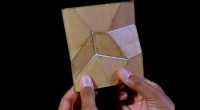
Example: A piece of paper or a textured wall. The light is scattered by the irregularities of the surface, causing the paper or wall to appear matte.